- Home
- About Us
-
Our Products
- Neonatal ICU Equipment for Hospitals
- Intensive Care Unit Equipment for Hospitals
- Operating Theatre Equipment for Hospitals
- Sterilization Equipment for Healthcare Facilities
- Labour Room Equipment for Maternity Care
- Inpatient Ward Equipment for Hospitals
- Emergency Room Equipment for Hospitals
- Diagnostic Imaging Equipment for Hospitals
- Mobility Aids for Patient Support & Rehabilitation
- Diagnostic Lab Equipment for Medical Testing
- OPD Consultation Equipment for Clinics
- Contact Us
- Blogs

Operating Theatre Equipment for Hospitals

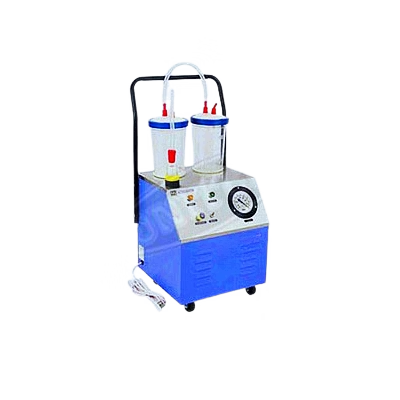
Suction machine
Surgical Suction Machine for Operating Theatre
High-performance suction unit designed for operating theatre and perioperative environments. It delivers steady vacuum for surgical suctioning with clinical-grade canisters and filtration. Intended for hospitals and surgical centres requiring reliable OT suction capability and repeatable supply.
Price upon request
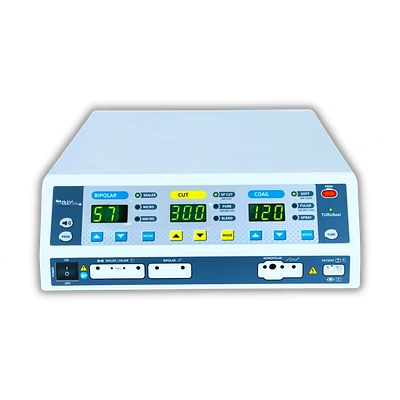
Sealing machine
Sealing Machine for Sterilization Pouches
Heat sealing unit designed to close sterilization pouches and wraps for instrument processing. It offers consistent seal width and temperature control to help maintain sterile integrity through steam cycles. Intended for sterile processing departments and surgical centres managing instrument turnover.
Price upon request
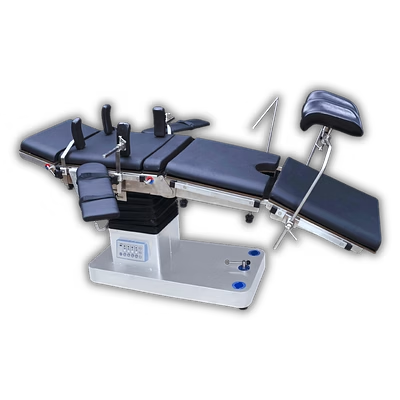
OT Table
Operating Theatre Table with Multi-Axis Positioning
OT table offering multi-axis tilt, height adjustment and rotation for surgical positioning. Models include radiolucent tops for C-arm access and modular accessory mounts for positioning aids. Suitable for operating theatres and surgical centres requiring standardized surgical tables.
Price upon request
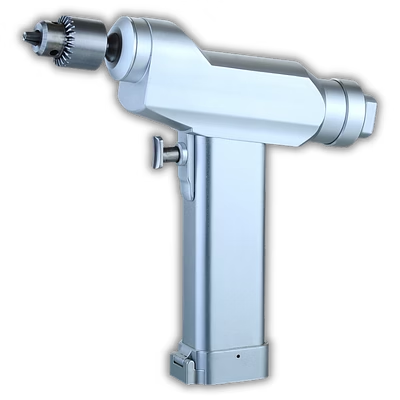
Ortho Drill
Orthopedic Surgical Drill System
Surgical drill system tailored for orthopedic procedures, offering variable speed control and sterile handpieces. The system integrates with OT instrument sets and supports bone drilling, reaming and fixation tasks. Intended for operating theatres and orthopedic surgery units requiring reliable drill systems and supply continuity.
Price upon request
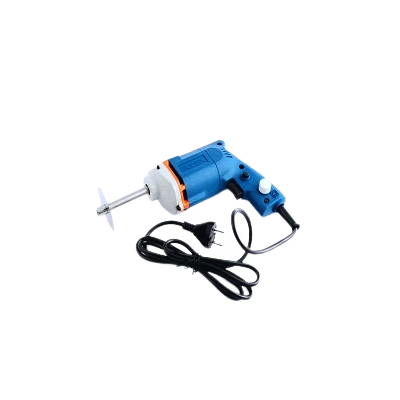
Ortho Cutter
Orthopedic Bone Cutter for Surgical Use
Surgical cutter engineered for bone resection and preparation tasks in orthopedic procedures. The instrument supports compatible blades and sterile handling workflows. Suitable for operating theatres and specialist orthopedic centres managing instrument inventories.
Price upon request
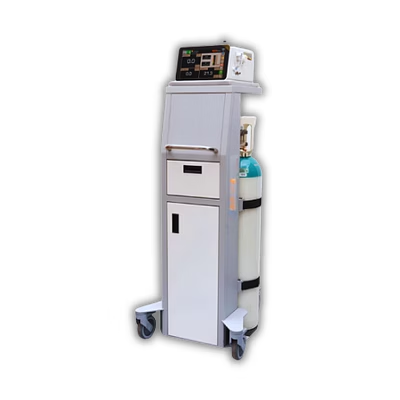
Nitric oxide system
Nitric Oxide Delivery System for Critical Care
Clinical nitric oxide delivery system intended for controlled pulmonary vasodilation in ICU and neonatal settings. The system provides precise dosing controls, monitoring interfaces and safety interlocks to support critical respiratory therapy. It is appropriate for intensive care units and neonatal departments requiring specialized gas delivery systems.
Price upon request
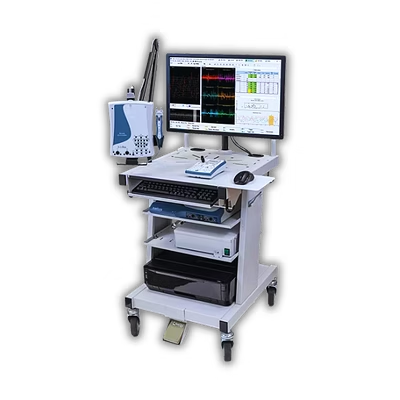
EMG System
Clinical Application & Patient Scope
Multi-channel EMG system designed for diagnostic neurophysiology in hospital neurology departments. The system supports routine and advanced nerve conduction studies and needle EMG workflows.
Fail-Safe Alarms & Closed-Loop Control
Built-in signal integrity checks and user alerts ensure test reliability. Modular acquisitions enable integration with EMR or hospital diagnostic suites.
Price upon request
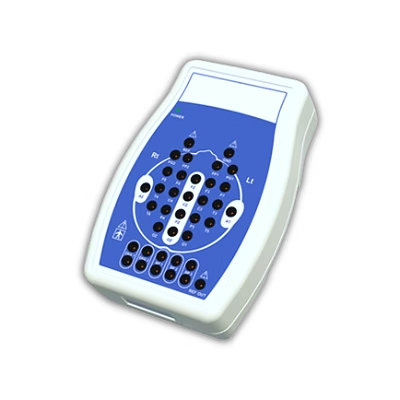
EEG System
Clinical Application & Patient Scope
Multi-channel EEG system designed for neurology wards and epilepsy monitoring units. Supports routine EEG, long-term monitoring, and ICU bedside recording.
Fail-Safe Alarms & Closed-Loop Control
Real-time artifact detection and channel monitoring reduce rework. Data export formats support integration with hospital records.
Price upon request
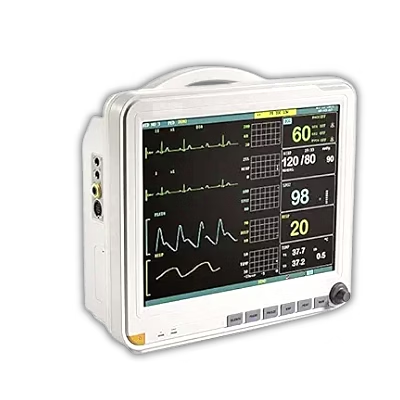
ECG Monitor
Clinical Application & Patient Scope
Portable ECG monitor for perioperative monitoring and ward telemetry. Provides continuous ECG, arrhythmia detection, and trend logging for patient management.
Fail-Safe Alarms & Closed-Loop Control
Configurable alarm thresholds and event storage support clinical decision-making. Data export assists in clinical record keeping.
Price upon request
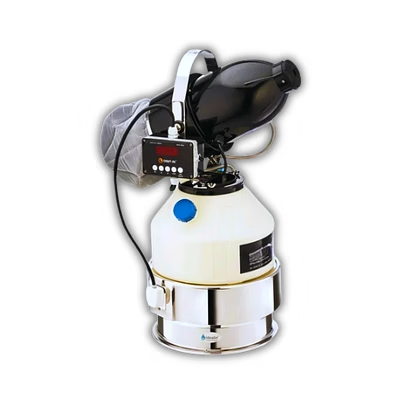
Fumigator
Clinical Application & Patient Scope
Fumigator unit for terminal disinfection in operating theatres and critical zones. Designed for controlled dispersion and dwell-time management.
Fail-Safe Alarms & Closed-Loop Control
Integrated cycle monitoring and safety interlocks protect staff and equipment. Cycle data export supports hygiene record-keeping.
Price upon request
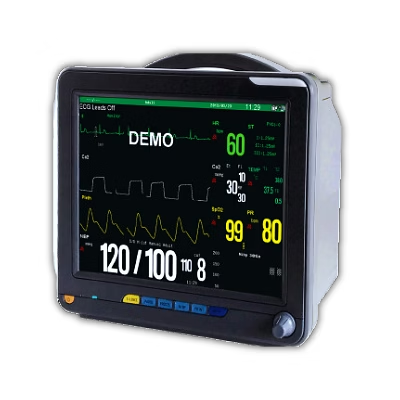
Patient Monitor
Clinical Application & Patient Scope
Multi-parameter patient monitor for ICU and operating theatre use. Tracks ECG, SpO2, NIBP, temperature, and respiratory parameters with configurable alarms.
Fail-Safe Alarms & Closed-Loop Control
Redundant alarm pathways and event logging support critical-care workflows. Central station connectivity available for ward telemetry.
Price upon request
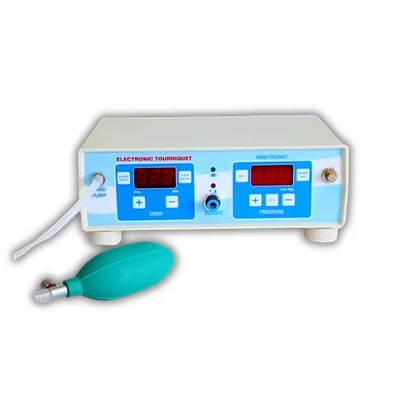
Electronic Torniquet
Clinical Application & Patient Scope
Electronic tourniquet system for limb procedures in operating theatres. Provides controlled limb occlusion with pressure monitoring and safety time limits.
Fail-Safe Alarms & Closed-Loop Control
Automated pressure release and alarm thresholds improve procedural safety. Data logging supports procedure records.
Price upon request
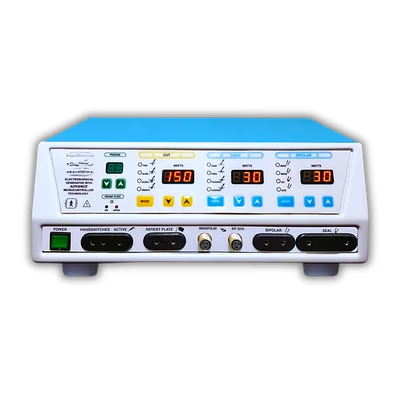
Cautery Machine
Clinical Application & Patient Scope
Electrosurgical cautery unit suitable for general and specialized surgical procedures. Offers monopolar and bipolar modes with adjustable power settings.
Fail-Safe Alarms & Closed-Loop Control
Built-in fault detection and return electrode monitoring reduce patient risk. User controls allow precise energy delivery per procedure requirements.
Price upon request
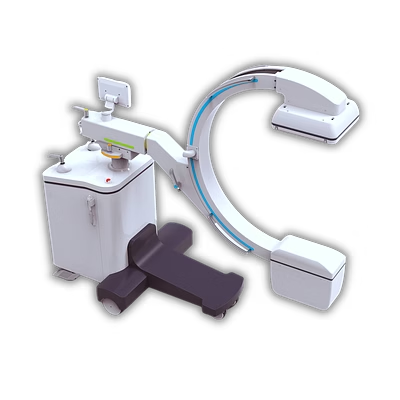
C-Arm
Clinical Application & Patient Scope
Mobile C-Arm for intraoperative fluoroscopy in surgical and interventional procedures. Supports high-resolution imaging and positioning flexibility for surgeons.
Fail-Safe Alarms & Closed-Loop Control
Integrated safety interlocks and real-time imaging checks support operating theatre workflows. DICOM export available for PACS archiving.
Price upon request
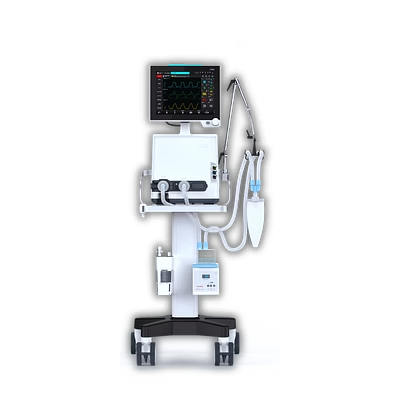
Ventilator
Clinical Application & Patient Scope
Critical care ventilator supporting adult and pediatric ventilation modes. Offers invasive and non-invasive configurations with advanced ventilation algorithms.
Fail-Safe Alarms & Closed-Loop Control
Integrated alarm management and failover routines support ICU safety. Battery backup ensures temporary operation during transfers.
Price upon request
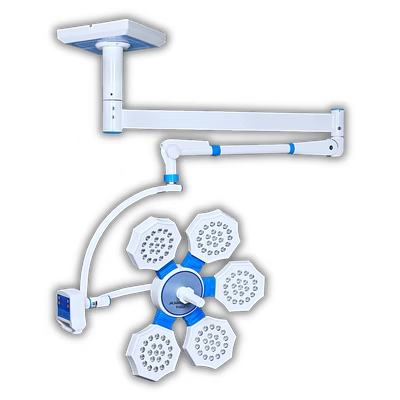
OT Lights
Clinical Application & Patient Scope
Shadowless LED operating theatre lights offering high CRI and adjustable color temperature for surgical visualization. Suitable for general and specialty procedures.
Fail-Safe Alarms & Closed-Loop Control
Integrated failure alerts and redundant LED arrays ensure continuous illumination. Adjustable intensity supports varied surgical workflows.
Price upon request
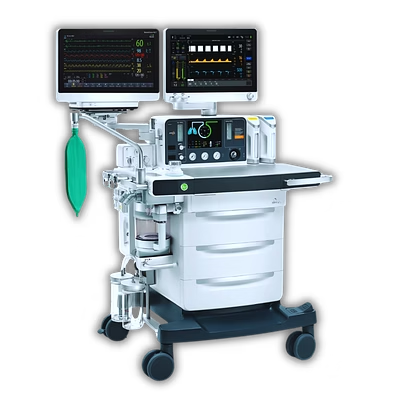
Anesthesia workstation
Clinical Application & Patient Scope
Integrated anesthesia workstation combining ventilatory support, vaporizer modules, and monitoring interfaces for operating theatres. Supports adult and pediatric anesthesia workflows.
Fail-Safe Alarms & Closed-Loop Control
Alarm hierarchy and agent monitoring provide layered safety. Redundant controls and manual override maintain clinician control during procedures.
Price upon request
A. Category Definition
This category includes equipment and systems used in operating theatres (OTs) to support surgical procedures in hospitals and specialized surgical centers. These products enable controlled, sterile, and efficient environments required for a wide range of medical operations.
Includes:
- Surgical tables and patient positioning systems
- Operating lights and illumination systems
- Anesthesia delivery and support equipment
- Surgical instrument storage and handling systems
- Sterile environment control and airflow systems
- Monitoring and support equipment used during procedures
Excludes:
- General ward furniture and inpatient beds
- Diagnostic-only equipment not used during surgery
- Outpatient consultation tools
- Non-medical facility furnishings
Examples:
- Fully equipped operating theatre setups in hospitals
- Modular OT environments with integrated systems
- Surgical suites used in multi-specialty hospitals
B. What These Products Are Used For
Products in this category are used to perform surgical procedures in a controlled and sterile environment. They support surgeons and medical teams by providing proper visibility, patient positioning, anesthesia management, and infection control during operations.
C. User Intent Alignment
Buyers typically explore this category to build or upgrade operating theatres, compare different equipment configurations, and ensure efficient surgical workflows. Procurement teams evaluate options based on reliability, integration, and suitability for specific surgical specialties. Some users also seek information on operating theatre design and requirements before making purchasing decisions.
D. Key Variations Within the Category
- Equipment type (surgical tables, lighting, anesthesia systems)
- Configuration (standalone units vs integrated modular systems)
- Technology level (manual systems to digitally controlled setups)
- Compatibility with surgical specialties (general, orthopedic, cardiac)
- Scale and capacity (single-theatre setups vs multi-theatre facilities)
E. Use Cases & Scenarios
These products are used in hospitals, day surgery centers, and specialty clinics to perform procedures ranging from routine surgeries to complex operations. They are essential in maintaining sterile conditions and ensuring patient safety during surgical interventions.
F. Selection Guidance
Buyers should consider durability, ease of cleaning, integration with existing systems, and adaptability for different surgical procedures. Advanced systems may provide better control, automation, and efficiency, while basic setups may suit smaller facilities or limited-use surgical environments.
G. Internal Entity Relationships
This category is closely related to sterilization systems, diagnostic equipment, ICU infrastructure, and hospital furniture. Complementary purchases often include surgical instruments, infection control products, and monitoring systems.