- Home
-
Our Products
- Intensive Care Unit Equipment for Hospitals ( ICU)
- Operation Theatre Equipment for Hospitals (OT)
- Neonatal ICU Equipment for Hospitals
- Labour Room Equipment for Maternity Care
- Emergency Room Equipment for Hospitals
- Inpatient Ward Equipment for Hospitals
- OPD Consultation Equipment for Clinics
- Mobility Aids for Patient Support & Rehabilitation
- Diagnostic Imaging Equipment for Hospitals
- Diagnostic Lab Equipment for Medical Testing
- Sterilization Equipment for Healthcare Facilities
- Contact Us
- About Us
- Blogs

Sterilization Equipment for Healthcare Facilities

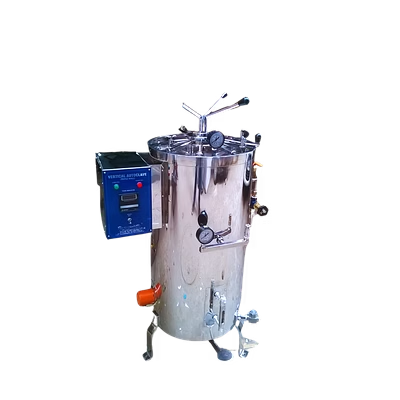
Autoclave
Class B Autoclave Sterilizer for Hospital SPD
Class B autoclave engineered for steam sterilization of surgical instruments, porous loads and sealed packs. It includes vacuum pulsing, gravity and pre-vac cycles to meet typical sterile processing requirements. The unit suits sterile processing departments, operating theatres, and central sterilization units with consistent demand and scheduled replenishment needs.
Price upon request
A. Category Definition
This category includes equipment and systems used for sterilization and infection control across healthcare environments such as hospitals, clinics, laboratories, and surgical centers. These products help eliminate or reduce microorganisms on medical instruments, surfaces, and materials to maintain safe and hygienic conditions.
Includes:
- Instrument sterilization systems
- Surface and area sterilization equipment
- Cleaning and decontamination units
- Packaging and storage solutions for sterile instruments
- Sterilization monitoring and control tools
- Waste handling and infection control support systems
Excludes:
- General cleaning tools not designed for sterilization
- Non-medical hygiene products
- Diagnostic equipment not related to infection control
- Household sanitation products
Examples:
- Sterilization setups used in hospital central sterile departments
- Equipment used in surgical instrument processing areas
- Infection control systems in diagnostic laboratories
B. What These Products Are Used For
Products in this category are used to ensure that medical instruments, equipment, and environments are free from harmful microorganisms. They support infection prevention, reduce contamination risks, and help maintain safe conditions for patient care and medical procedures.
C. User Intent Alignment
Buyers typically explore this category to establish or upgrade sterilization systems, compare different infection control solutions, and ensure compliance with healthcare hygiene practices. Procurement teams focus on efficiency, reliability, and compatibility with facility workflows. Some users also seek information about sterilization processes and equipment before making purchasing decisions or reordering consumables.
D. Key Variations Within the Category
- Sterilization method (heat-based, chemical-based, or other processes)
- Equipment capacity (small-scale units to large facility systems)
- Automation level (manual to automated systems)
- Application area (instrument sterilization, surface sterilization, waste handling)
- Integration with hospital or laboratory workflows
E. Use Cases & Scenarios
These products are widely used in hospitals, dental clinics, laboratories, and surgical centers. They support instrument reprocessing, infection control in operating areas, and maintenance of sterile environments in patient care settings.
F. Selection Guidance
Buyers should consider the type of materials being sterilized, required capacity, ease of operation, and maintenance needs. Facilities handling high volumes may benefit from automated systems, while smaller setups may opt for compact solutions. Efficiency, consistency, and workflow compatibility are key decision factors.
G. Internal Entity Relationships
This category is closely linked to operating theatre equipment, diagnostic systems, laboratory equipment, and hospital furniture. Complementary purchases often include cleaning supplies, storage systems, and infection control accessories.